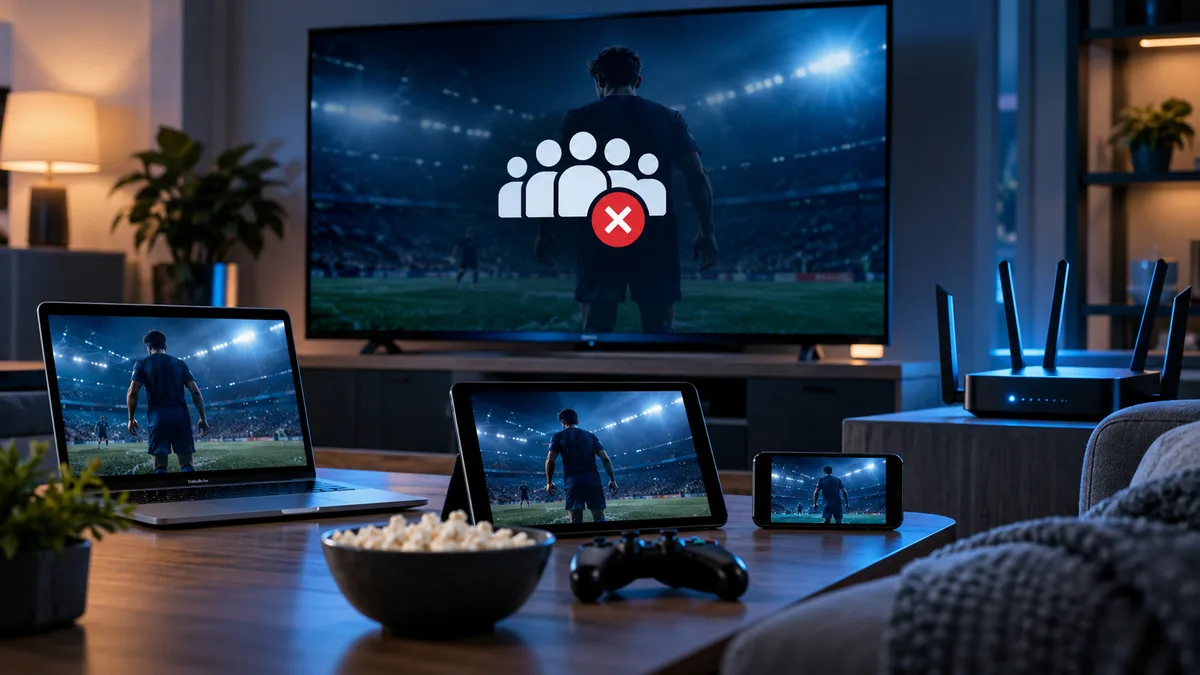

"Multiscreen" means several devices watching different things at the same time on one subscription. Here's why it matters.
1. Everyone watches what they want
No more arguments over the remote: sport on the main TV, kids' channels on the tablet, a box set in the bedroom.
2. No extra hardware per room
Pay-TV usually needs a box for each room. With IPTV, any Smart TV, stick, phone or laptop already in the room works.
3. One subscription for the whole household
One payment covers every screen up to your plan's limit — usually far cheaper than multiple subscriptions.
4. Any device, anywhere in the home
Move the tablet into the kitchen, or take a laptop into the garden. If it's on your Wi-Fi, it works.
5. Easy to manage
One login, one renewal date and one support contact.
Single-screen vs multiscreen plans
| Plan | Screens at once |
|---|---|
| Starter (3 months) | 2 |
| Premium (6 months) | 3 |
| Pro (12 months) | 4 |
| Ultimate (Lifetime) | 5 |
See full details on our pricing page.
Performance across several screens
- Check total bandwidth: three HD screens need about 30 Mbps.
- Wire the main TV to free up Wi-Fi for portable devices.
- Use HD on secondary screens rather than 4K.
- Close streams you're not watching to avoid hitting your connection limit.
Final thoughts
Multiscreen is one of the biggest advantages of IPTV for families. Choose a plan with enough screens for your busiest evening. Try it free.