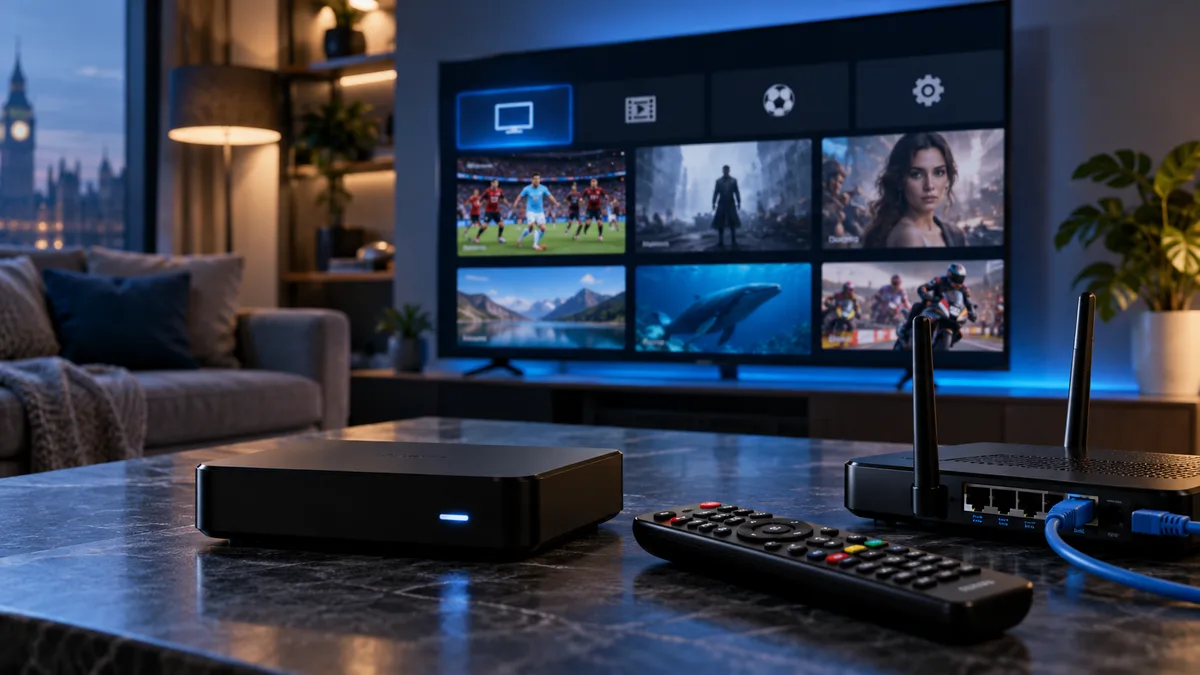
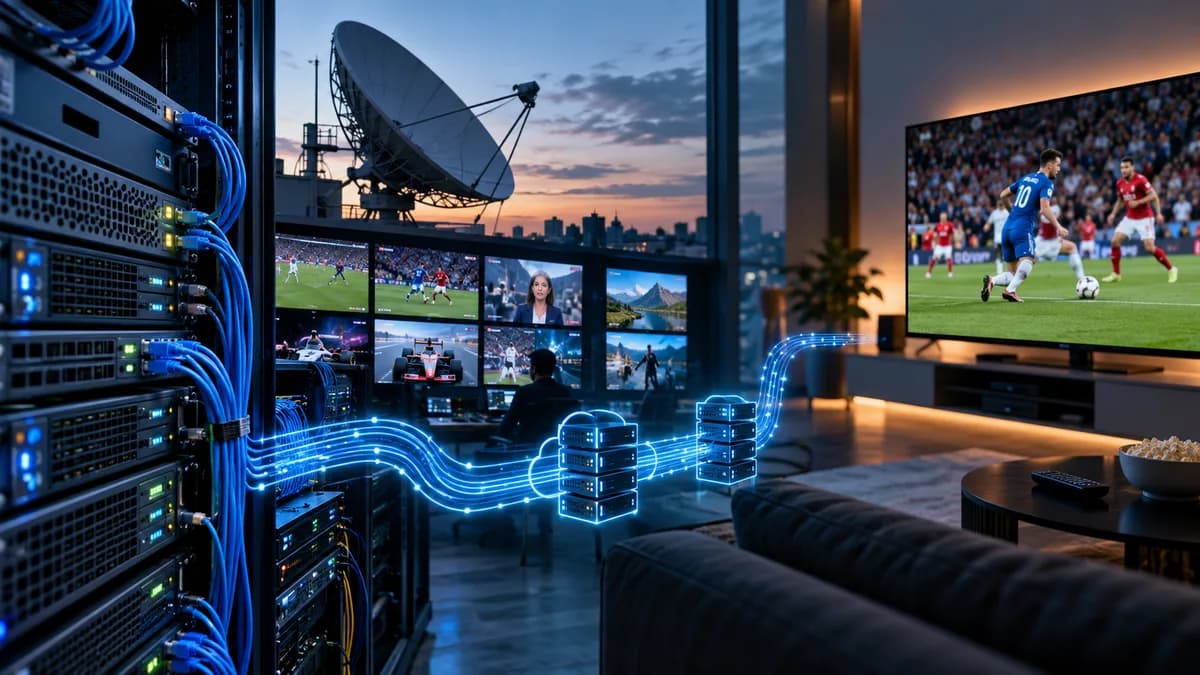
An IPTV server is the system that receives TV channels, prepares them for internet delivery, checks who's allowed to watch and sends streams to your device.
How an IPTV server works
Stage 1: Signal acquisition
Channels are received from their source and brought into the system.
Stage 2: Encoding and transcoding
Video is compressed (for example with H.264 or H.265/HEVC) and often prepared in several quality levels for different connection speeds.
Stage 3: Distribution
Streams are copied across multiple servers and networks so thousands of viewers can watch without overloading a single machine.
Stage 4: Authentication and delivery
When you open a channel, your app sends your login. The server checks your account, plan and connection limit, then delivers the stream.
Types of IPTV server interfaces
| Type | How you connect | Typical apps |
|---|---|---|
| M3U playlist | Single playlist URL | VLC, Kodi, most players |
| Xtream Codes API | Server + username + password | Smarters, TiviMate |
| Stalker / MAG portal | Portal URL + MAC address | MAG, Formuler, Smart STB |
See Xtream Codes, M3U and Stalker portal.
What makes quality infrastructure
- Bandwidth capacity planned for peak demand, not average demand.
- Geographic distribution for low latency.
- Redundancy and failover so one failure doesn't take channels down.
- Adaptive bitrate so streams step down quality instead of freezing.
- Monitoring to catch failing channels quickly.
How quality affects your viewing
| Experience | Good infrastructure | Poor infrastructure |
|---|---|---|
| Channel switching | 1–3 seconds | 5–10 seconds or fails |
| Peak hours | Stable | Freezing |
| 4K | Consistent | Drops to low quality |
How to identify quality infrastructure
- Realistic pricing — capacity costs money.
- Stable peak-time trials.
- Multiple login options.
- Real support that can investigate.
Common problems and solutions
- One channel buffers: a source issue — report it.
- All channels slow: check your connection first; see buffering.
- Complete outage: usually brief; check with support.
- 4K drops to low quality: your connection may be limiting adaptive streaming.
The honest truth about costs
Running good servers is expensive. That's why extremely cheap services are often oversold. Read about what makes IPTV fast.
Test it yourself
Request a free trial and test at peak time — the best way to judge any provider's infrastructure.